
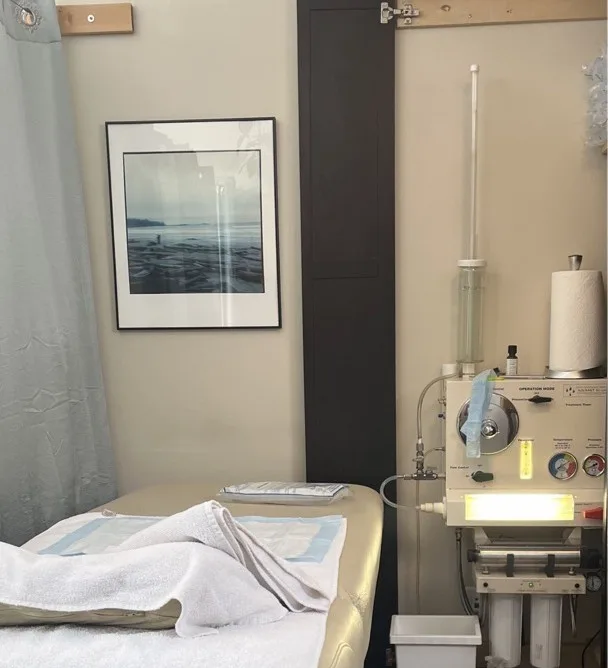
Colonics carry risks, including potentially serious side effects, and they are not suitable for everyone. The answer to “are colonics safe?” depends on more than a practitioner’s experience or the equipment used. Your medical history, medications and reasons for seeking a session also matter. Clinical evidence for general colon cleansing benefits is limited. At Vestta Whole Health in Vancouver, we encourage you to discuss suitability with a qualified healthcare professional before booking. Knowing the risks and the limits of the evidence helps you ask informed questions. An intake conversation can explain the service, but it can’t replace medical advice about your individual health.
What side effects can colon cleansing cause?
Colon cleansing can cause digestive side effects and more serious complications. Mayo Clinic’s guidance on colon cleansing describes cramping, bloating, diarrhea, nausea and vomiting. It also lists dehydration, infection, changes in mineral balance and a tear in the rectum among the risks.
The severity of a possible complication matters even when a website gives no frequency estimate. We don’t have reliable rates here to predict your individual chance of harm. A reassuring testimonial can’t supply that information either.
Ask how a practitioner responds if discomfort starts during a session. Make sure you know how to communicate and stop the procedure. Training, hygiene and clear communication are things to discuss; they don’t make a procedure risk-free.
Who needs medical advice before a colonic?
People considering colon hydrotherapy should discuss the procedure with a healthcare professional who knows their health history. That conversation matters even if you’ve had a colonic before without a problem.
The National Center for Complementary and Integrative Health identifies histories associated with greater risk:
- Gastrointestinal disease.
- Previous colon surgery.
- Severe hemorrhoids.
- Kidney disease.
- Heart disease.
Those are examples, not a complete clearance checklist. Share other diagnoses, recent procedures and new symptoms as well. Mention prescribed medicines, non-prescription products and supplements.
Tell your clinician what session you are considering. If the procedure includes anything beyond water, ask for the ingredients. Being specific gives the clinician more useful information than saying only that you’re planning a wellness appointment.
What does the evidence say about detox claims?
NCCIH reports limited clinical evidence for colonic irrigation and insufficient evidence for its proposed uses. Passing water through the bowel does not, by itself, show that a procedure removes toxins throughout the body.
Claims about a cleanse should be judged by evidence for the specific claim. A person’s account of feeling different after a visit doesn’t establish a treatment for disease. Nor does a change immediately after a session establish a lasting benefit.
Be cautious about broad promises to improve many unrelated health problems. Ask what outcome is being proposed and what research supports it. If the explanation relies only on testimonials or vague references to toxins, the evidence question remains unanswered.
Vestta’s service information describes the appointment and equipment. We don’t promise that colon hydrotherapy cures illness or provides a proven whole-body detox.
What should you ask a practitioner?
Our guide to a first colonic walks through the appointment and the opportunities to ask questions.
A practitioner should be able to explain the proposed service, relevant training and how your questions will be handled. You can ask for plain answers before deciding whether to proceed.
Useful topics include the equipment and its disposable parts, cleaning procedures, water or other ingredients, privacy and consent. Ask what happens if you want to stop. Find out whether your health history calls for advice from your healthcare professional before an appointment.
At Vestta, Archer Jensan is a health consultant with IACT instructor-level and NBCHT certification. Those credentials describe his training. They should not be read as a claim that he is a medical doctor.
You don’t need to accept a recommendation during the conversation. Take time to compare what is being offered with the advice you’ve received about your health.
When should digestive symptoms be checked?
Persistent digestive symptoms need medical assessment rather than an assumption that cleansing will address the cause. Constipation can have different causes, and an appointment for colon hydrotherapy does not diagnose them.
NIDDK recommends medical advice when constipation doesn’t improve with self-care. Its guidance on constipation warning signs calls for prompt care when constipation accompanies certain symptoms. These include blood in the stool, constant abdominal pain, vomiting, fever or inability to pass gas.
If symptoms are severe or you feel acutely unwell, seek urgent medical care. Don’t wait for a wellness appointment or interpret worsening symptoms as evidence that a detox is working.
Making an informed choice at Vestta
Vestta’s colon hydrotherapy appointments begin with an intake conversation and an explanation of the closed system. Your comfort and consent remain part of the discussion throughout the visit.
Read about our colon hydrotherapy service in Vancouver to understand the appointment itself. A qualified healthcare professional should advise on whether it is appropriate for your health circumstances.